
Interview of Prof. Françoise Simon – WP3 Coordinator
Project ASIMUTE is a European multidisciplinary  research project that gathers women and men from various walks of life. Their experiences may be different but the people involved in the project are committed to the advancement of science. Let’s learn about their personal paths and motivations through a series of portraits.

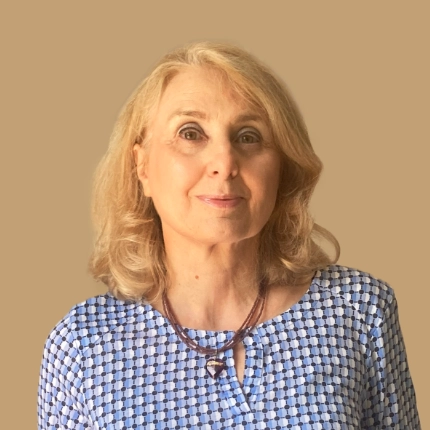
In this fourth installment, WP3 coordinator Professor Françoise Simon, explains to us how important the Humanities and Social sciences are in the acceptance of smart meter devices. 

Question 1: What is your personal path ? What led you to have a scientific career  ?
Prof. Simon: I am a Management Science professor working at Université de Haute-Alsace, specialized in Consumer behavior. Before starting my academic career, I worked for a dozen years as a marketing manager, research manager and also commercial manager in various public and private companies. Although I worked outside of academia, I always maintained a strong relationship with academic research. My desire to indulge myself into analyzing the marketing issues I was confronted with on a daily basis slowly took me over. This is why, in 2005, I joined Université de Haute-Alsace as a Lecturer
 
Question 2: Why did you choose this area of research  ?
 
Prof. Simon: Consumer behavior is a Management science specialty that aims at figuring out how a person, through consumption, reinforces their identity construction, find their place in consumer culture, find room to create personal forms of service and product use, but also room to resist what they perceive as impediments on and threats to their autonomy. As for me, I am particularly interested in the way consumers understand the message of big brands and commercial organisations, how they decypher it and how, in case of rejection, they start building forms of resistance that are more or less active.
 
Question 3: How is your area of research related to the project ?
 
Prof. Simon: The Consumer behavior specialty covers consumption and the use of products, services and media, whether they are offered by private or public entities. Of course, at the heart of this specialty lies consumers’ interest in eco-friendly product offers and their acceptance of the ecological practices national governments recommend.
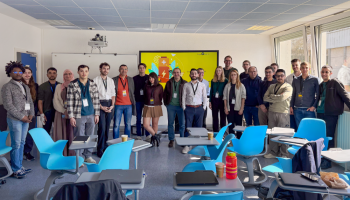
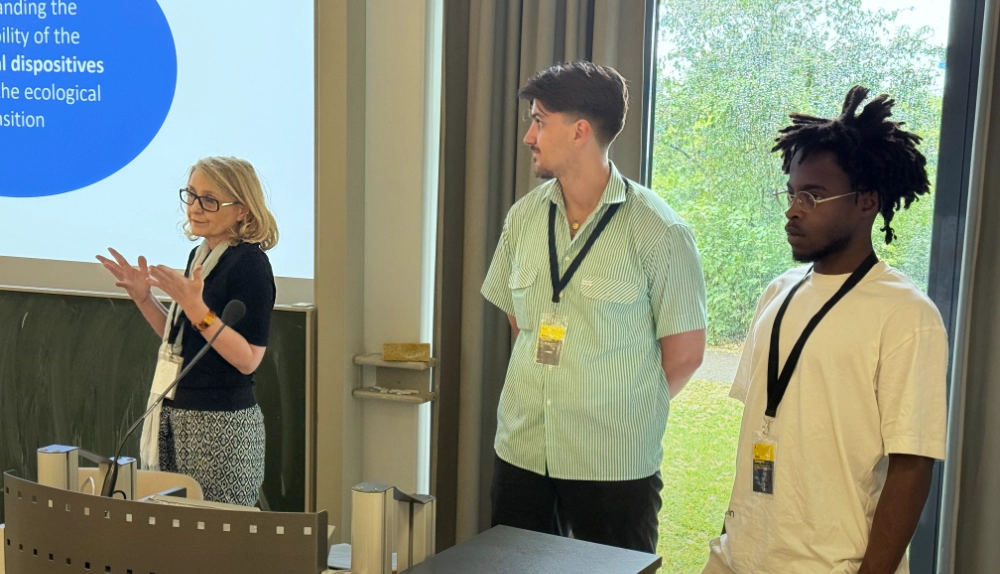
Prof. Françoise Simon along with doctoral students and WP3 contributors Antoine Tournier and Joël Sangwa.
Question 4: What was the initial question you asked yourself at the beginning of the project ?
 
Prof. Simon: Work Package 3, entitled “Energy savings and compensatory consumption”, is designed as an introduction to the other Work Packages of project ASIMUTE. It raises two essential questions:
  • How high is an household’s level of acceptance of ecological transition ? With this question, we consider ecological transition as a whole that encompasses various national measures (the mandatory installation of Linky smart-meters in France, for instance), incentives (the French government’s subsidies when a household installs solar panels), consumer-accompanying infrastructures (public EV charging stations, for instance) and recommended behaviors, such as eco-friendly actions or the use of sustainable transportations.
  • Is there a sizable risk that some aspects of the ecological transition that households deem too bothersome or confusing trigger averse reactions ? Among these averse reactions, we are particularly interested in what we call compensation. This designates additional forms of consumption or the reinforcement of unsustainable habits.
Question 5: Have you answered this question so far?
 
Prof. Simon: We have been working on this project for the past couple of years. We currently have solid results that have been presented at various scientific conferences. For instance, we covered the issue of the rupture of meaning in ecological transition in March 2025 at the “Journée de la Recherche en Marketing du Grand-Est” conference (you can read the summary of the conference in French here). Moreover, some of our results have also been submitted to scientific journals for review.

Actually, our findings indicate that a large majority of consumers is aware that global warming is real and that it decreases biodiversity

Question 6: What can you share with us about your current findings without revealing too much?
 

Prof. Simon: As for accepting the ecological transition, we studied French households and demonstrated that there are very distinctive sociostyles when it comes to sustainable consumption and how national guidelines are perceived. Generally speaking, the studied households see the ecological transition as a global issue. Their consumption habits and their willingness to cooperate within a low-carbon oriented community align with their view of the ecological transition as an important societal guideline.

Actually, our findings indicate that a large majority of consumers is aware that global warming is real and that it decreases biodiversity. Nevertheless, the ecological transition guidelines are considered threats, which we built into a typology. Based on experiments, we demonstrated that these threats create a cognitive dissonance in consumers and that they downgraded their responsibility level when it comes to sustainable consumption. The next eighteen months will enable us to enhance our models and apply them onto the German context.
Question 7: When and why did you start working on environment-related projects ?
 
Prof. Simon: I started working on environmental issues by studying digital dematerialization. Companies have used the ecology argument time and again to transform the way they interacted with their customers : they closed physical stores and replaced them with online stores, stopped mailing physical catalogs to their customers, started using smart meters, etc… I was really interested in understanding how consumers accepted the pysical-to-digital shift that companies offered them, how they perceived the companies’ intentions and how these changes impacted their relation to brands and ecology.
 
Question 8: Lately, have you been working on other environment-related projects ? And, if so, would you mind telling us about their goals and/or results ?
 
Prof. Simon: Recently, I was involved in “Smart Meter Inclusif“, an Interreg project led by Prof. Djaffar Ould-Abdeslam. With my colleague Virginie Schweitzer, Lecturer at Université de Haute-Alsace, we studied how well Linky smart meter users appropriate the device, in order to control and lower their electricity consumption. We were honored to find out that, in November 2024, the High Committee on French Strategy and Planning shared our results in an analysis note that explains how the digital shift can contribute to decarbonation.
 
Question 9: Are you excited about other projects, be they yours or somebody else’s ?
 
Prof. Simon: As a Humanities and Social sciences researcher, I am keen on decyphering how society evolves, especially in Europe. I always try to find connections between consumer cultures and brand communication, on the one hand, and state-supported initiatives, on the other. As for my current environment-focused projects, I have been working on the impact of influencers on society, as some of them use a very elaborate pro-environment discourse, and also the behavioral polarization that may happen in big cities when it comes to urban planning and sustainable transportations. This is why I have been paying much attention to Driving Urban Transitions (DUT), a European project that focuses on urban transformations and the creation of resilient and carbon neutral neighborhoods.

Our latest news

Every year, sociology researchers and leading experts in commerce meet ...

On November 25, the ASIMUTE project hosted a conference named ...

We are pleased to announce that our partners from KIT, ...

Project ASIMUTE is a European multidisciplinary research project that gathers ...